
Hydrocarbon Dehydration
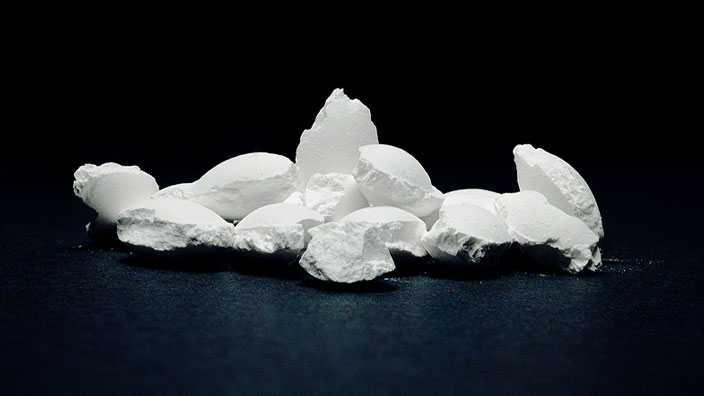
Use OxyChem’s almond-shaped PELADOW® DG Calcium Chloride Briquettes as an effective desiccant to remove water from gas and liquid hydrocarbon streams such as natural gas, propane, kerosene, and diesel fuel.


Where To Use
Calcium chloride effectively removes water from natural gas, propane, kerosene, diesel, and other hydrocarbon streams. In a dehydrator, the hydrocarbon flows upward through a bed containing a calcium chloride desiccant for dehydration. The hydrocarbon’s dissolved water is converted into a liquid calcium chloride brine solution, which is drained off the bottom of the dehydration unit.
OxyChem’s almond-shaped PELADOW® DG Calcium Chloride Briquettes are specially designed for increased surface area contact with the hydrocarbon to enhance drying and support hydrocarbon flow through the drying bed. In contrast, drying beds filled with calcium chloride chips and chunks may produce a less uniform flow, which results in reduced drying performance.
Hydrocarbon Dehydration FAQs
The pH reading for an undiluted sample of 35% solution is approximately 9. OxyChem calcium chloride products are alkaline due to the presence of a slight calcium hydroxide impurity.
Accurate and consistent pH measurement in concentrated salt solutions can be challenging. Results vary depending on the pH probe used and the degree of sample dilution.
Store product in a dry area, and tightly reseal after each use. To maintain product quality while in storage, solid calcium chloride must be protected from moisture. If the product is on a pallet covered by an intact plastic shroud, it can be stored outdoors on a well-drained surface. If the shroud is torn, pierced, or removed, the palletized product should be stored indoors or under a waterproof covering.
For additional information, see our Calcium Chloride Handbook.
When properly stored to protect from moisture contact, the expected shelf life for solid calcium chloride products is 36 months from the date of manufacture. Calcium chloride does not degrade or deteriorate; however, the shelf life is limited based on the potential for moisture intrusion into the product, which may cause product clumping. Solid calcium chloride absorbs moisture from the air (i.e., is hygroscopic), even to the point of converting to liquid brine (i.e., is deliquescent).