
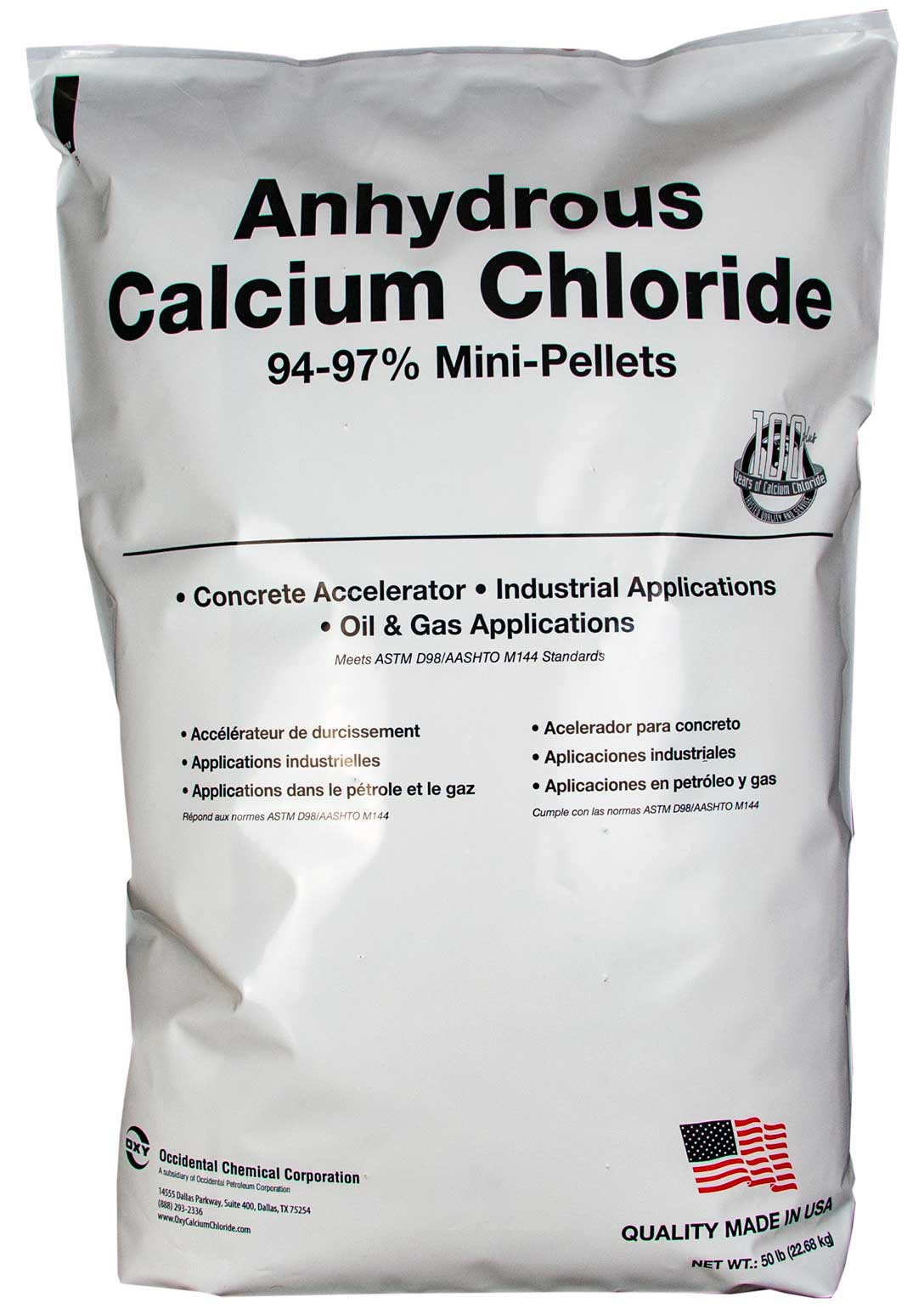
Anhydrous Calcium Chloride 94-97% Mini-Pellets

Product Description
Anhydrous Calcium Chloride 94-97% Mini-Pellets are white, free-flowing pellets that meet or exceed ASTM D98 and AASHTO M144 purity requirements for Type S, Grade 4, Class B calcium chloride.
To create a solution by mixing this product with water, refer to our Making Solutions Calculator.
Where To Use
Concrete Acceleration

Drilling Fluid Additive

Industrial

Pool & Spa

Refrigeration

Roads: Base Stabilization
Roads: Dust Control

Roads: Full-Depth Reclamation

Tire Weighting
Storage & Shelf Life
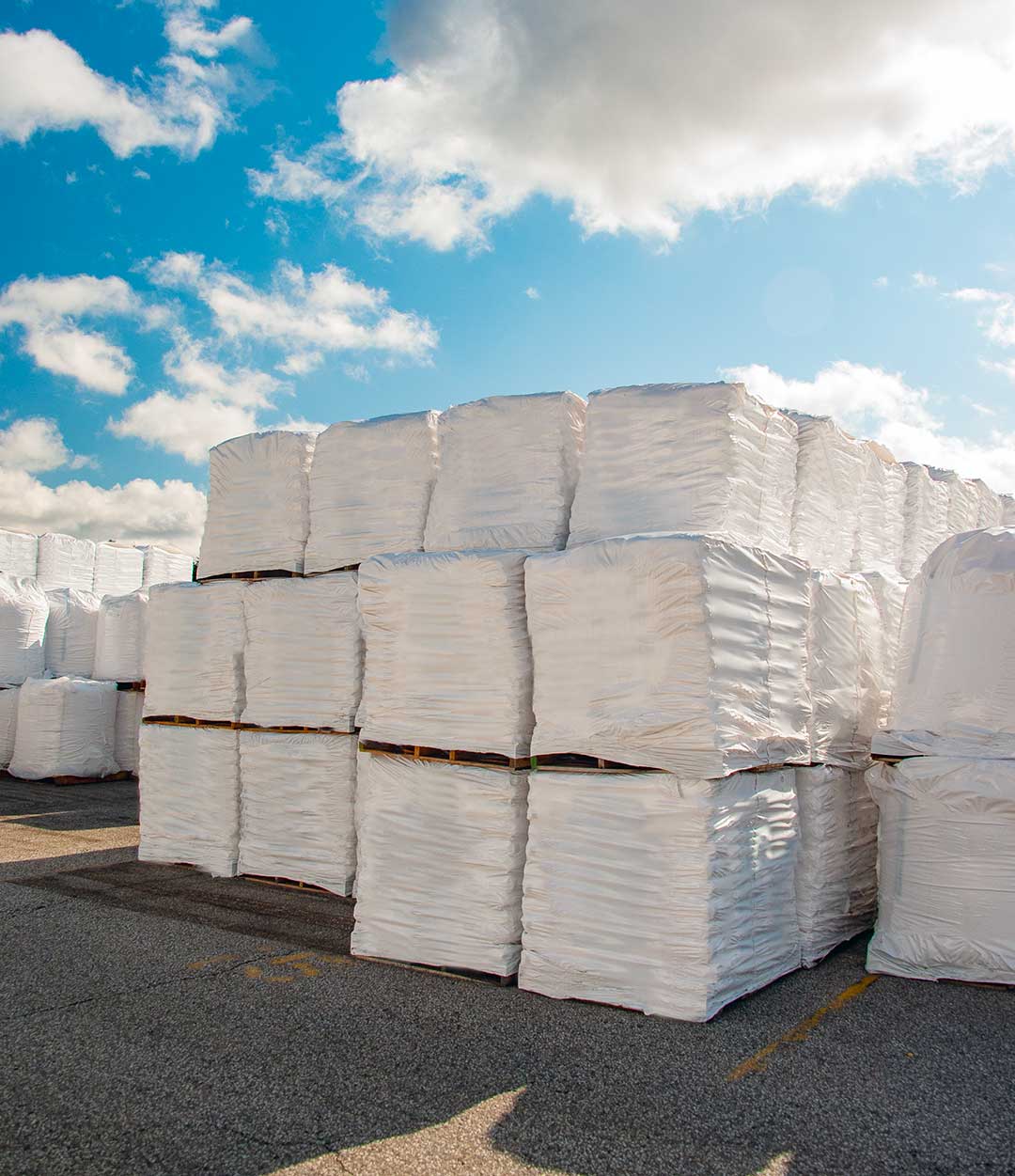
Store in a dry area, and tightly reseal after each use. To maintain product quality while in storage, solid calcium chloride must be protected from moisture. If the product is on a pallet covered by an intact plastic shroud, it can be stored outdoors on a well-drained surface. If the shroud is torn, pierced, or removed, then the palletized product should be stored indoors or under a waterproof covering.
When properly stored to protect from moisture contact, the expected shelf life for all calcium chloride packaged products is 36 months from the date of manufacture. Calcium chloride does not degrade or deteriorate; however, the shelf life is limited based on the potential for moisture intrusion into the product. Moisture will cause a decrease in overall calcium chloride assay and may cause product clumping. Solid calcium chloride absorbs moisture from the air (i.e., is hygroscopic), even to the point of converting to liquid brine (i.e., is deliquescent).
For more detailed information see our Calcium Chloride Handbook.
Anhydrous Calcium Chloride FAQs
First, determine the amount of dry calcium chloride to mix with water using our helpful Making Solutions Calculator tool.
Always start with cool water and add the solid calcium chloride slowly to the water while continuously mixing. Significant heat is released when dissolving solid calcium chloride, and a temperature increase will occur. For example, when dissolving DOWFLAKE® Xtra 83-87% Calcium Chloride Flakes while making up a 30% solution, the temperature can be expected to increase almost 84°F.
If solids are allowed to sit motionless while in contact with water, a hard cake will form that will be slow to dissolve.
The pH reading for an undiluted sample of 35% solution is approximately 9. OxyChem calcium chloride products are alkaline due to the presence of a slight calcium hydroxide impurity.
Accurate and consistent pH measurement in concentrated salt solutions can be challenging. Results vary depending on the pH probe used and the degree of sample dilution.
Pure calcium chloride is 36.1% calcium. To determine the amount of calcium in a calcium chloride product, simply multiply the calcium chloride concentration by 36.1%. The typical calcium concentration of certain products is included in the table below:
Calcium Content of OxyChem Products |
||
|
Product |
Calcium Chloride |
Calcium |
| Anhydrous Calcium Chloride 94-97% Mini-Pellets |
>94% |
>34% |
| BRINERS CHOICE® Anhydrous Calcium Chloride Pellets |
>93.0% |
>33.6% |
| DOWFLAKE® Xtra 83-87% Calcium Chloride Flakes |
>83% |
>30% |
| Food Grade Anhydrous 94-97% Calcium Chloride Pellets |
93.0 – 100.5% |
33.6 – 36.3% |
| LIQUIDOW® Food Grade Calcium Chloride Solution |
32.0 – 33.0% |
11.6 – 11.9% |
Calcium Chloride
>94%
Calcium
>34%
Calcium Chloride
>93.0%
Calcium
>33.6%
Calcium Chloride
>83%
Calcium
>30%
Calcium Chloride
93.0 – 100.5%
Calcium
33.6 – 36.3%
Calcium Chloride
32.0 – 33.0%
Calcium
11.6 – 11.9%
Store product in a dry area, and tightly reseal after each use. To maintain product quality while in storage, solid calcium chloride must be protected from moisture. If the product is on a pallet covered by an intact plastic shroud, it can be stored outdoors on a well-drained surface. If the shroud is torn, pierced, or removed, the palletized product should be stored indoors or under a waterproof covering.
For additional information, see our Calcium Chloride Handbook.
If lightly caked, the product may be broken up by knocking the closed package against a hard surface, like breaking up a bag of ice. If the caked product is too hard to break apart, the product is, unfortunately, unusable and should be disposed of according to guidance on the product label. DO NOT TRY FORCEFUL HAMMERING TO BREAK THE PRODUCT APART. FLYING PRODUCT PIECES MAY BE AN EYE HAZARD.
When properly stored to protect from moisture contact, the expected shelf life for solid calcium chloride products is 36 months from the date of manufacture. Calcium chloride does not degrade or deteriorate; however, the shelf life is limited based on the potential for moisture intrusion into the product, which may cause product clumping. Solid calcium chloride absorbs moisture from the air (i.e., is hygroscopic), even to the point of converting to liquid brine (i.e., is deliquescent).
OxyChem issues Certificates of Analysis only for the following specialty products:
Food Grade Anhydrous 94-97% Calcium Chloride Pellets
BRINERS CHOICE® Anhydrous Calcium Chloride Pellets
PELADOW® DG Calcium Chloride Briquettes
LIQUIDOW® Food Grade Calcium Chloride Solution
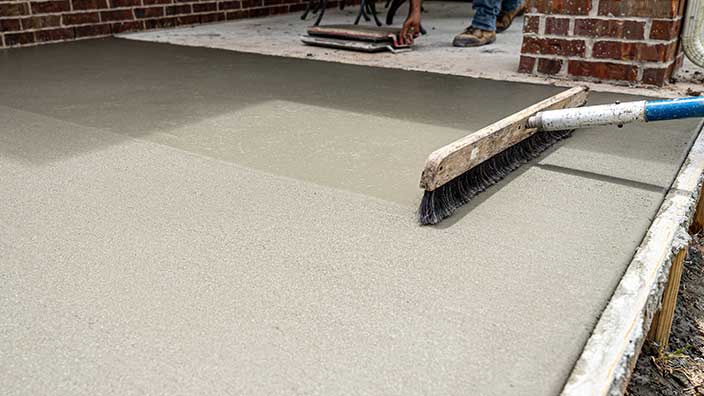
The amount of calcium chloride used should not exceed 2% and application rates should vary with temperature.
Preferably, add calcium chloride solution to aggregates in the mixer drum or as a portion of the mixing water. Add calcium chloride at the ready-mix plant if the concrete will be discharged within one hour of the start of mixing. Otherwise, add it at the job site, mixing for at least three minutes or 30 revolutions of the mixer, whichever is longer.
If dry calcium chloride is used, it should be free of lumps and added to aggregates in the mixer drum before mixing, or to the mixed concrete just before discharge.
Please refer to the publication Calcium Chloride in Portland Cement Concrete for more complete information about the use of calcium chloride as an accelerating admixture.
Consult the most recent reports from the following American Concrete Institute (ACI) committees for information about the amounts of calcium chloride that are allowed in concrete under various exposure conditions, and conditions in which calcium chloride should not be used. Relevant reports include:
ACI 201 Durability of Concrete
ACI 212 Admixtures for Concrete
ACI 222 Corrosion of Metals in Concrete
ACI 306 Cold Weather Concreting
ACI 318 Standard Building Code for Reinforced Concrete
Yes. To increase the calcium hardness by 10 ppm in 10,000 gallons of water, add one pound of DOWFLAKE® Xtra 83-87% Calcium Chloride Flakes. Solid calcium chloride currently manufactured by OxyChem contains bromide. While the presence of bromide in pool and spa water is not uncommon (it is often present in disinfectants), it can react with other chemicals to form unwanted disinfection by-products.
Please refer to the publication Pool and Spa Water Treatment Applications for more complete information.
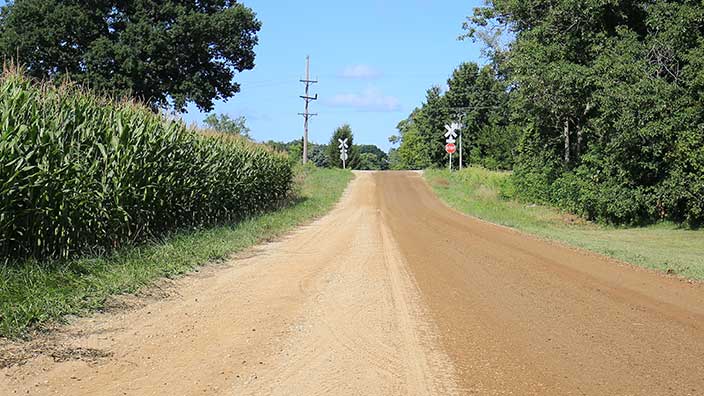
Effective dust control is built first on a foundation of quality gravel and proper road maintenance. Road construction experts can help you determine the proper foundation for your needs.
Recommended calcium chloride application rates to control dust on gravel surfaces are included below. NOTE: When applying solid products, it is usually preferable to water the surface prior to spreading the product.
Recommended Application Rates (US Units) |
|||
|
Product |
Unpaved Roads |
Truck Terminals & Parking Lots |
Mine Haul & Logging Roads |
| LIQUIDOW® 35% |
0.30 gal/yd2 |
0.33 gal/yd2 |
0.39 gal/yd2 |
|
2117 gal/lane-mi* |
2532 gal/lane-mi |
2744 gal/lane-mi |
|
| LIQUIDOW® 38% |
0.27 gal/yd2 |
0.30 gal/yd2 |
0.35 gal/yd2 |
|
1901 gal/lane-mi |
2112 gal/lane-mi |
2464 gal/lane-mi |
|
| LIQUIDOW® 42% |
0.24 gal/yd2 |
0.26 gal/yd2 |
0.31 gal/yd2 |
|
1664 gal/lane-mi |
1849 gal/lane-mi |
2157 gal/lane-mi |
|
| DOWFLAKE® Xtra 83-87% |
1.38 lb/yd2 |
1.56 lb/yd2 |
1.83 lb/yd2 |
|
4.84 ton/lane-mi |
5.49 ton/lane-mi |
6.45 ton/lane-mi |
|
| Anhydrous 94-97% |
1.23 lb/yd2 |
1.39 lb/yd2 |
1.64 lb/yd2 |
|
4.33 ton/lane-mi |
4.90 ton/lane-mi |
5.77 ton/lane-mi |
|
Unpaved Roads
0.30 gal/yd2
2117 gal/lane-mi*
Truck Terminals & Parking Lots
0.33 gal/yd2
2532 gal/lane-mi
Mine Haul & Logging Roads
0.39 gal/yd2
2744 gal/lane-mi
Unpaved Roads
0.27 gal/yd2
1901 gal/lane-mi
Truck Terminals & Parking Lots
0.30 gal/yd2
2112 gal/lane-mi
Mine Haul & Logging Roads
0.35 gal/yd2
2464 gal/lane-mi
Unpaved Roads
0.24 gal/yd2
1664 gal/lane-mi
Truck Terminals & Parking Lots
0.26 gal/yd2
1849 gal/lane-mi
Mine Haul & Logging Roads
0.31 gal/yd2
2157 gal/lane-mi
Unpaved Roads
1.38 lb/yd2
4.84 ton/lane-mi
Truck Terminals & Parking Lots
1.56 lb/yd2
5.49 ton/lane-mi
Mine Haul & Logging Roads
1.83 lb/yd2
6.45 ton/lane-mi
Unpaved Roads
1.23 lb/yd2
4.33 ton/lane-mi
Truck Terminals & Parking Lots
1.39 lb/yd2
4.90 ton/lane-mi
Mine Haul & Logging Roads
1.64 lb/yd2
5.77 ton/lane-mi
Recommended Application Rates (Metric Units) |
|||
|
Product |
Unpaved Roads |
Truck Terminals & Parking Lots |
Mine Haul & Logging Roads |
| LIQUIDOW® 35% |
1.36 liter/m2 |
1.51 liter/m2 |
1.76 liter/m2 |
|
5027 liter/lane-km* |
5604 liter/lane-km |
6511 liter/lane-km |
|
| LIQUIDOW® 38% |
1.22 liter/m2 |
1.36 liter/m2 |
1.58 liter/m2 |
|
4514 liter/lane-km |
5032 liter/lane-km |
5846 liter/lane-km |
|
| LIQUIDOW® 42% |
1.07 liter/m2 |
1.19 liter/m2 |
1.38 liter/m2 |
|
3951 liter/lane-km |
4404 liter/lane-km |
5116 liter/lane-km |
|
| DOWFLAKE® Xtra 83-87% |
0.75 kg/m2 |
0.85 kg/m2 |
0.99 kg/m2 |
|
2.76 tonne/lane-km |
3.13 tonne/lane-km |
3.68 tonne/lane-km |
|
| Anhydrous 94-97% |
0.67 kg/m2 |
0.76 kg/m2 |
0.89 kg/m2 |
|
2.47 tonne/lane-km |
2.80 tonne/lane-km |
3.29 tonne/lane-km |
|
Unpaved Roads
1.36 liter/m2
5027 liter/lane-km*
Truck Terminals & Parking Lots
1.51 liter/m2
5604 liter/lane-km
Mine Haul & Logging Roads
1.76 liter/m2
6511 liter/lane-km
Unpaved Roads
1.22 liter/m2
4514 liter/lane-km
Truck Terminals & Parking Lots
1.36 liter/m2
5032 liter/lane-km
Mine Haul & Logging Roads
1.58 liter/m2
5846 liter/lane-km
Unpaved Roads
1.07 liter/m2
3951 liter/lane-km
Truck Terminals & Parking Lots
1.19 liter/m2
4404 liter/lane-km
Mine Haul & Logging Roads
1.38 liter/m2
5116 liter/lane-km
Unpaved Roads
0.75 kg/m2
2.76 tonne/lane-km
Truck Terminals & Parking Lots
0.85 kg/m2
3.13 tonne/lane-km
Mine Haul & Logging Roads
0.99 kg/m2
3.68 tonne/lane-km
Unpaved Roads
0.67 kg/m2
2.47 tonne/lane-km
Truck Terminals & Parking Lots
0.76 kg/m2
2.80 tonne/lane-km
Mine Haul & Logging Roads
0.89 kg/m2
3.29 tonne/lane-km
The most desirable calcium chloride product for any given situation is a matter of personal choice. Solid calcium chloride products may be spread directly or dissolved in water and spread as a liquid. In the U.S., the most common liquid concentration used for dust control is 38%. In Canada, the most common concentration is 35%. Liquid concentrations higher than 38% may be used; however, higher concentrations are more likely to crystallize as the solution cools.
To maintain optimum dust control during unusually long periods of hot, dry weather, water the road surface during early morning hours as needed to reconstitute the initial treatment. Re-apply calcium chloride in the late summer or early fall as needed to prolong dust control.
For additional information, see Use Responsibly - Controlling Dust.
Noticeable corrosion is unlikely to occur on vehicles driven on unpaved surfaces treated with calcium chloride. However, calcium chloride for dust suppression is present in small amounts and can stay bound in the soil in the road. Therefore, it is recommended to wash vehicles and equipment if you suspect the vehicle has encountered calcium chloride.
Likelihood of damage to vegetation and grassy areas along roadsides can be significantly limited if dust control applications follow current recommendations and standard practices.
For additional information, see Use Responsibly - Managing Impact.